


A shower door lock keeps a glass enclosure securely closed while protecting bathroom privacy in shared households, hotels, and commercial facilities. Selecting the correct lock depends on the glass thickness, frame style, and the level of security a space requires. This guide covers the main mechanisms, materials, and installation factors buyers should weigh before purchasing shower hardware.
Goldtech Hardware, established in 2011, has spent more than a decade developing architectural hardware, including shower hardware and glass door fittings, manufactured in facilities that follow ISO quality and environmental standards. That manufacturing background informs much of the guidance below, since consistent tolerances and finish quality directly affect how well a lock performs over years of daily use.
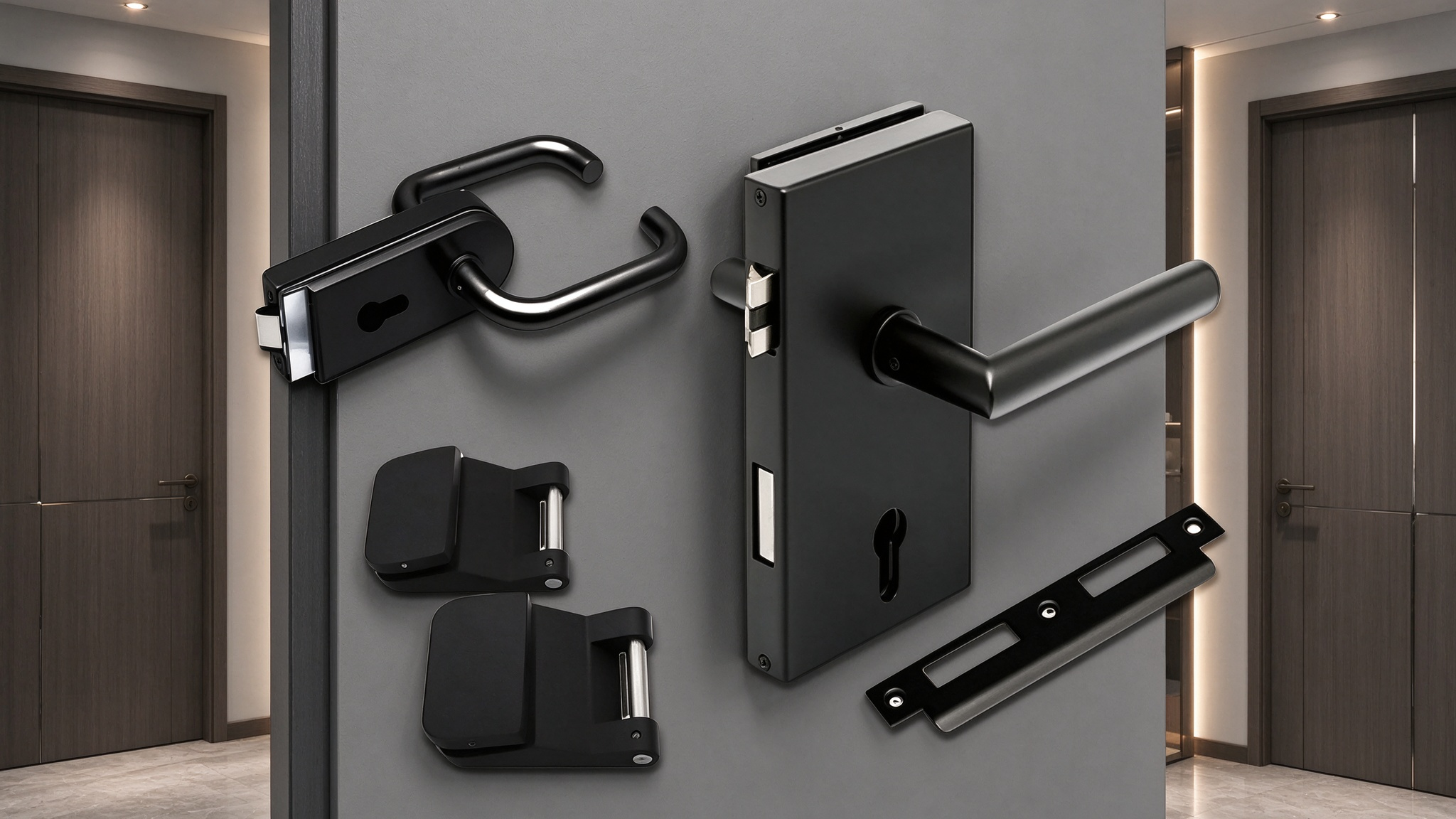
Choosing Hardware for Frameless and Framed Glass Enclosures
Frameless glass enclosures typically rely on patch fittings or clamp-mounted hardware that grips the glass edge directly, since there is no metal frame to anchor a traditional strike plate. Framed enclosures, by contrast, can accommodate more conventional latch-and-strike assemblies because the aluminum or steel frame provides a surface for mounting.
Buyers working with frameless glass should confirm the glass thickness (commonly 8mm, 10mm, or 12mm) matches the hardware's rated clamp range. A glass shower door lock designed for 10mm glass will not seat properly on thinner or thicker panels, which can lead to loosening or cracking around the mounting points over time.
Types of Locking Mechanisms for Glass Shower Enclosures
Several mechanism styles are common across the glass hardware market:
Magnetic catches: Hold the door closed using paired magnets embedded in the glass edge or frame; these offer a smooth close but minimal resistance against forced entry.
Ball-and-catch latches: Use a spring-loaded ball that seats into a strike, giving a firmer close than magnets with an audible click.
Key-operated cylinder locks: Found on commercial or rental installations where restricted access matters, these integrate a small cylinder into the handle or frame.
Thumb-turn privacy locks: Allow a user to lock from inside without a key, suited to private residential bathrooms.
A shower glass door lock chosen for a family bathroom usually favors a thumb-turn privacy mechanism, since it balances convenience with a basic level of privacy without requiring a key that could be misplaced.
Materials and Finishes That Resist Corrosion
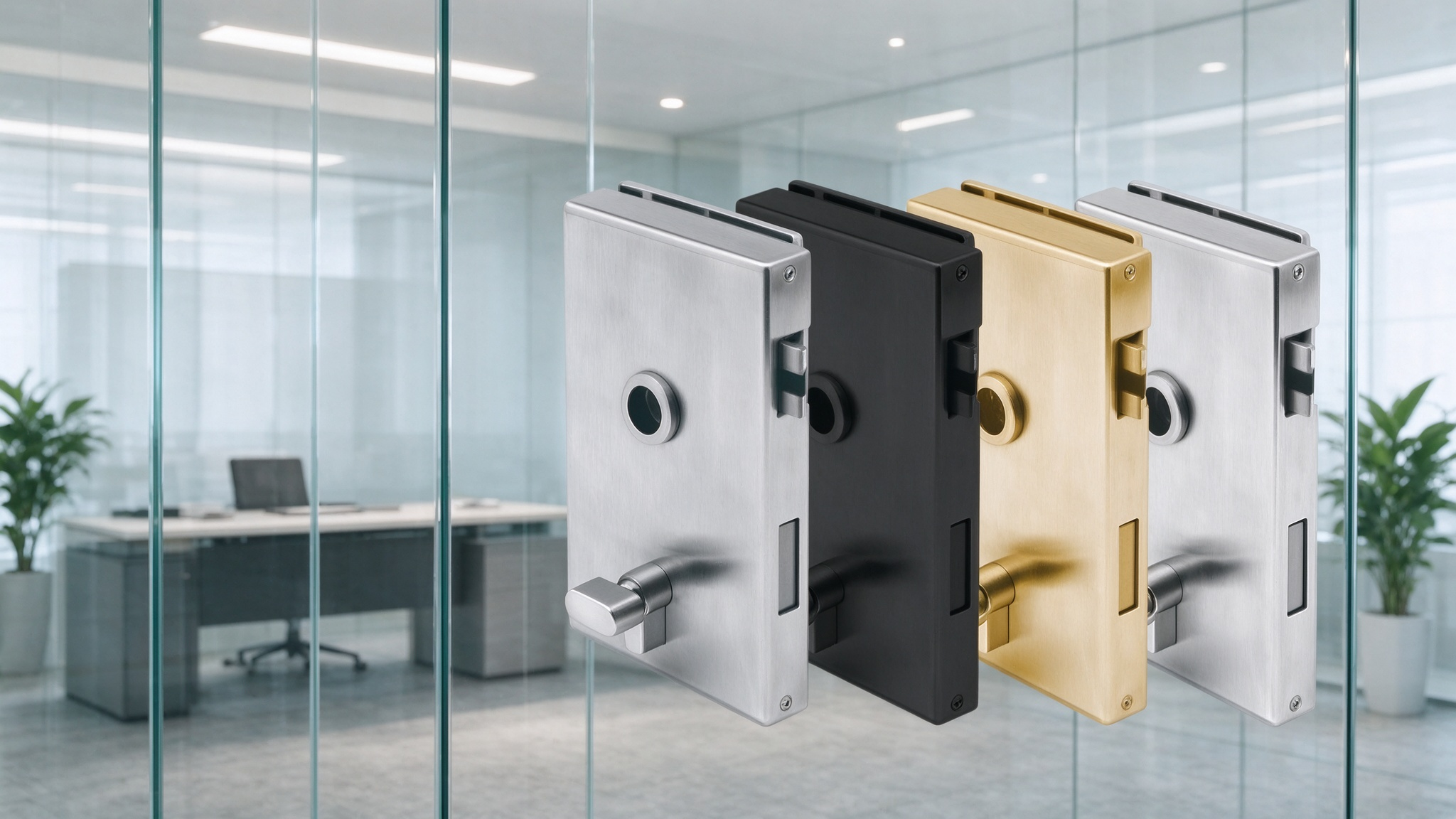
Bathroom hardware is exposed to constant humidity, so material selection affects both appearance and lifespan. Stainless steel, particularly 304 or 316 grade, resists pitting and discoloration far better than lower-grade alloys or plated base metals. Finishes such as brushed nickel, matte black, and polished chrome each offer different resistance levels; brushed finishes tend to hide water spots more effectively than high-polish surfaces.
Manufacturers that produce their own stainless steel door handles, hinges, and pull handles alongside shower-specific fittings, such as Goldtech Hardware's glass door lock and hinge lines, generally apply the same corrosion-resistant standards across product categories, which simplifies matching finishes throughout a bathroom renovation.
Installation Considerations for Glass Door Hardware
Proper installation protects both the hardware and the glass itself. Key factors include:
Confirming the cutout or clamp position aligns with the manufacturer's template before drilling.
Using the specified torque when tightening clamp screws, since overtightening can crack tempered glass edges.
Checking door swing clearance so the lock mechanism does not strike adjacent fixtures.
Sealing any exposed metal-to-glass contact points to reduce long-term moisture infiltration.
Professional installation is recommended for frameless setups, where precise alignment between the mounting bracket and the glass edge determines how smoothly the lock will operate.
Comparing Common Locking Mechanisms
Mechanism | Typical Use Case | Access Method | Relative Security Level |
|---|---|---|---|
Magnetic catch | Residential, frameless enclosures | None (push-to-close) | Low |
Ball-and-catch latch | Residential, framed or frameless | None (push-to-close) | Low-Medium |
Thumb-turn privacy lock | Shared or family bathrooms | Internal turn knob | Medium |
Key-operated cylinder | Rentals, commercial facilities | External key | Medium-High |
Maintenance Tips for Long-Lasting Performance
Routine care extends the service life of any bathroom hardware. Wipe metal surfaces with a soft cloth after each use to prevent mineral buildup from hard water. Avoid abrasive cleaners or bleach-based products on brushed or matte finishes, as these can dull the surface over time. Periodically check mounting screws for looseness, since vibration from daily opening and closing can gradually shift clamp positions.
For mechanisms with moving parts, a small amount of silicone-based lubricant applied to the latch or hinge point once or twice a year keeps the action smooth without attracting dust the way petroleum-based lubricants can.
Frequently Asked Questions
Can a shower door lock be installed on existing glass without replacing the panel?
In most cases yes, provided the glass thickness matches the hardware's clamp or cutout specification; retrofitting usually requires either a clamp-style fitting or professional drilling for cylinder hardware.
Are magnetic catches strong enough for daily family use?
Magnetic catches work well for routine closing but offer limited resistance against a hard push, so households wanting a firmer seal often pair them with a secondary latch.
Do glass shower door lock finishes need to match other bathroom fixtures?
Matching is a visual preference rather than a functional requirement, though many buyers coordinate the lock finish with faucet and towel bar hardware for a consistent look.
How often should shower hardware be inspected for wear?
A basic visual and function check every six months catches most issues, such as loosening screws or early corrosion, before they affect performance.
Is custom hardware available for non-standard glass thicknesses?
Manufacturers with OEM/ODM capabilities, such as Goldtech Hardware, can typically produce fittings suited to glass dimensions outside the standard 8mm-12mm range.
Summary
Selecting the right shower door lock comes down to matching the mechanism, material, and installation method to the specific glass enclosure and household needs. Stainless steel hardware with a corrosion-resistant finish, installed according to the manufacturer's clamp or cutout specifications, tends to offer the most reliable long-term performance. Whether the goal is a simple magnetic catch for a frameless panel or a key-operated cylinder for a commercial shower glass door lock, understanding these distinctions helps buyers choose hardware that holds up to daily bathroom conditions for years to come.


