


Goldtech manufactures a full range of architectural fittings — including locks, handles, hinges, and frameless glass fixtures — designed to meet ISO quality standards for commercial and residential buildings. Founded in 2011, the company operates an integrated supply chain that spans raw material sourcing to finished, ready-to-install products.
Architectural Fittings Cover Several Functional Categories
Modern buildings rely on dozens of small but critical components to keep doors, showers, and partitions functioning safely. Door hardware refers broadly to the mortise locks, handles, hinges, closers, and coordinators that control how a door opens, closes, and locks. These components are selected based on the door's material, traffic volume, and required fire or security rating.
Beyond standard doors, many commercial lobbies, offices, and bathrooms now use frameless glass panels instead of traditional framed doors. Fixtures suited to these applications — patch fittings, pivot hinges, and lock sets engineered for tempered glass — require a different manufacturing tolerance than fittings made for wood or metal doors. Choosing the correct category for a given installation reduces maintenance costs and prevents premature wear.
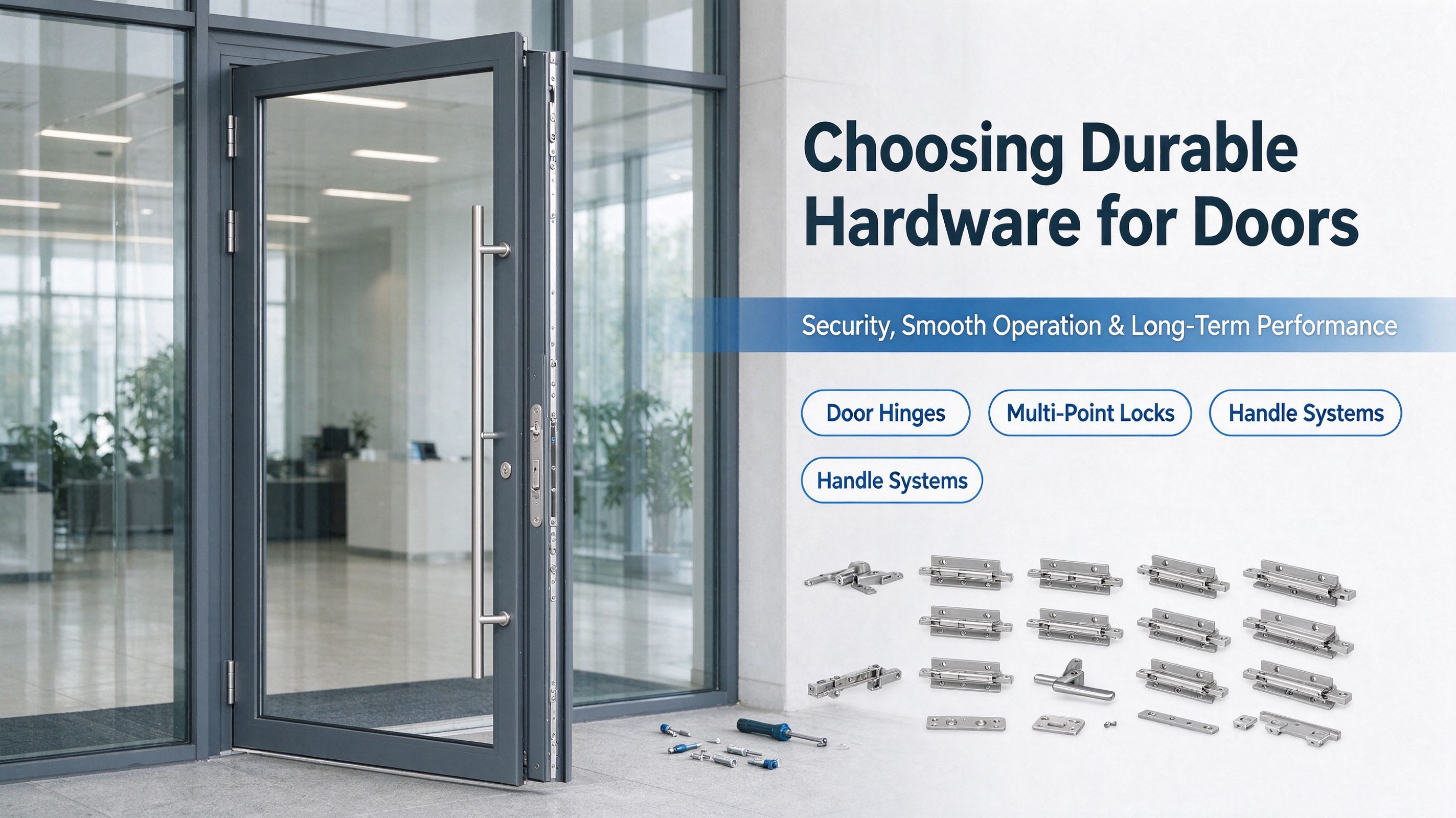
Mortise Locks and Handles Form the Core of Most Entry Systems
A mortise lock set is installed into a pocket cut directly into the edge of the door, rather than mounted on its surface, which gives it greater strength and tamper resistance than a cylindrical lock. Goldtech produces ANSI-compliant mortise locks alongside matching trim sets, stainless steel handles, and tubular latches, allowing architects to specify a consistent finish across an entire building.
Entrance pull handles and locking pull handles are typically selected for storefronts and office entries where both durability and a polished appearance are required. Push plates and pull handle combinations are common on fire-rated doors that must remain operable under heavy daily use. Each of these products is manufactured with licensed, certified welding techniques to ensure the joints hold up under repeated stress.
Hinges and Closers Determine How a Door Performs Over Time
A door's hinge selection affects everything from its swing weight to its long-term alignment. Heavy-duty hinges are paired with door coordinators on double-door openings to ensure that both leaves close in the correct sequence, which is especially important for fire-rated assemblies. Shower hinges serve a related but distinct purpose: they must resist constant moisture exposure while still supporting the weight of tempered glass panels without sagging.
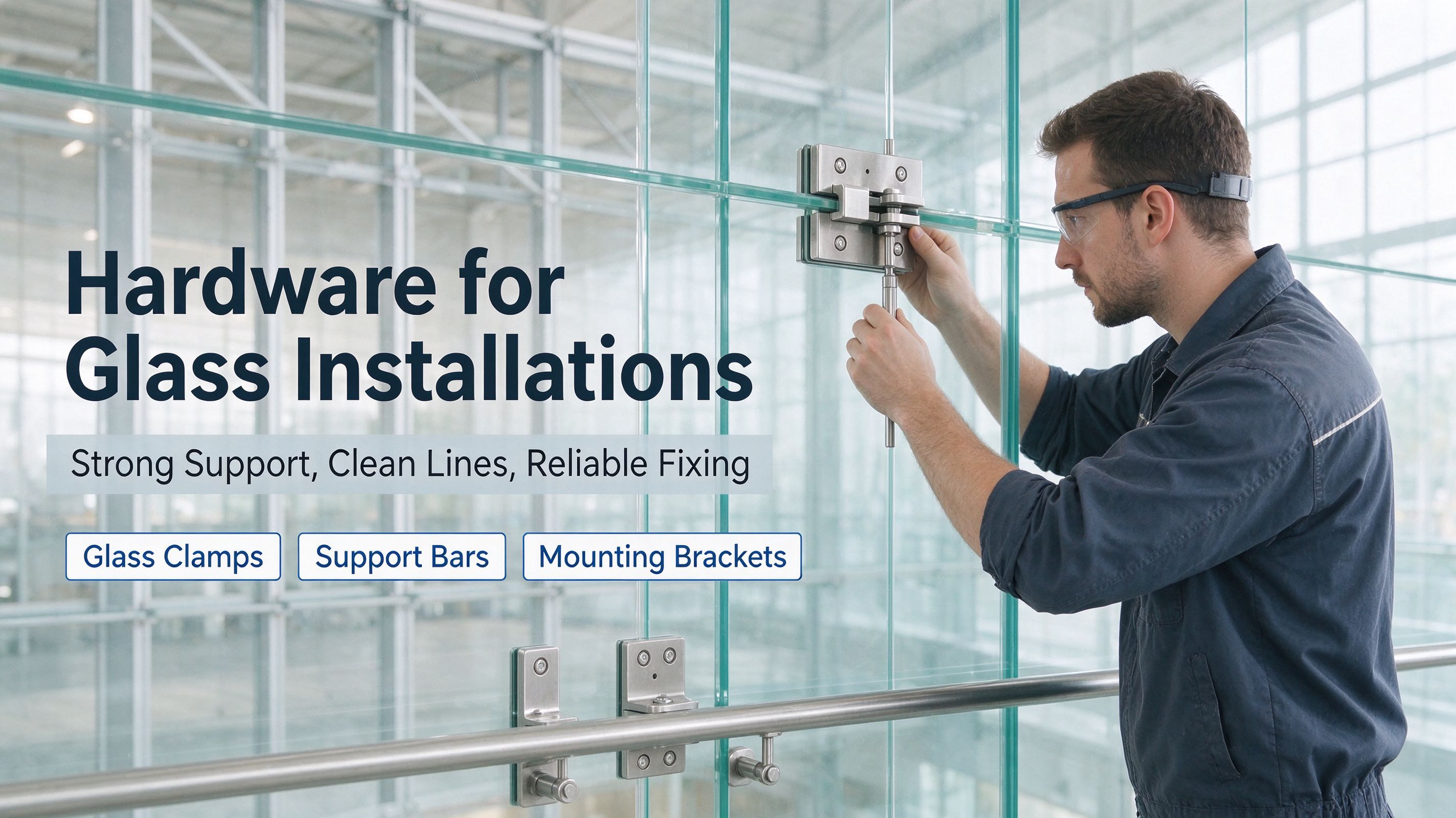
Glass hardware for shower enclosures typically includes pivot hinges, wall-mounted brackets, and pull-and-towel-bar combinations finished in corrosion-resistant stainless steel. Because bathroom fittings are exposed to humidity daily, the plating and base alloy used in manufacturing directly affect how long the fixture lasts before it corrodes or loosens.
Several Hardware Types Are Purpose-Built for Frameless Glass Doors
Frameless glass installations depend on a narrower set of specialized components than standard swinging doors, since there's no door frame to anchor traditional hinges or strike plates. The main categories include:
Patch fittings, which clamp directly onto the edge or face of a glass panel to create a pivot point without drilling through the frame
Floor-mounted or overhead pivot sets that allow a glass door to swing without visible top or bottom hardware
Locks and hinges manufactured specifically for tempered glass thickness tolerances, since standard wood-door hardware will not fit
Sliding door tracks and rollers for glass partitions in offices and retail spaces
Canopy systems that support glass awnings above storefront entrances
Because glass door hardware must be drilled or clamped with extremely tight tolerances, manufacturers typically produce it on dedicated tooling rather than adapting standard door-hardware lines. This is one reason architects often specify glass-specific product lines separately from their general door hardware schedule on a project.
Material and Finish Selection Affects Durability Across Climates
Stainless steel is the most common base material for architectural fittings because it resists corrosion in coastal, humid, or high-traffic commercial environments. Goldtech's product lines use this alloy across handles, mortise cylinders, and shower fittings to maintain a consistent appearance and lifespan across an entire building's hardware package.
The table below summarizes common fitting categories, their typical applications, and the primary material consideration for each.
Category | Typical Application | Primary Material Consideration |
|---|---|---|
Mortise locks & trim sets | Entry doors, office suites | ANSI compliance, security rating |
Pull handles & push plates | Storefronts, fire-rated doors | Weld strength, finish durability |
Shower hinges & pull handles | Bathrooms, wet areas | Corrosion resistance |
Patch fittings & pivot sets | Frameless glass partitions | Tolerance precision for tempered glass |
Sliding door tracks | Retail, office partitions | Load capacity, roller durability |
Canopy systems | Storefront entrances | Weather resistance, structural support |
Specifying the Right Fittings Involves a Few Practical Steps
Architects and contractors generally follow a similar process when selecting components for a project:
Confirm the door or panel material (wood, metal, or tempered glass), since hardware is rarely interchangeable between categories
Check fire and security ratings required by local building code, particularly for commercial entries and stairwells
Match finishes across handles, hinges, and locks to maintain a consistent appearance throughout the building
Account for environmental exposure, selecting corrosion-resistant alloys for bathrooms, coastal properties, or high-humidity climates
Request 2D/3D engineering drawings from the manufacturer when a project involves custom dimensions or non-standard glass thickness
Following this sequence helps prevent delays caused by ordering fittings that don't match the door or glass specifications already fixed in a project's design.
Frequently Asked Questions
What is the difference between a mortise lock and a cylindrical lock?
A mortise lock is installed into a pocket cut into the door edge, giving it greater strength and resistance to forced entry, while a cylindrical lock is bored straight through the door face and is generally simpler to install.
Can patch fittings be used on any thickness of glass?
No. Patch fittings are manufactured to match specific tempered glass thicknesses, so the correct fitting must be matched to the panel's measured thickness before installation.
Why do shower fittings need different materials than interior door fittings?
Shower fittings are constantly exposed to moisture and humidity, so they require corrosion-resistant alloys such as stainless steel to prevent rust and loosening over time, unlike interior fittings in drier environments.
How often should door closers and coordinators be inspected?
Most manufacturers recommend a visual and functional inspection at least once a year, with more frequent checks for high-traffic commercial doors to catch alignment issues before they cause damage.
Does Goldtech offer custom engineering for non-standard door or glass projects?
Yes, Goldtech provides 2D/3D engineering services and ODM/OEM support for projects that require custom dimensions, finishes, or fitting configurations outside standard product lines.
Conclusion
Selecting the right components for a building's doors, showers, and glass partitions comes down to matching material, finish, and tolerance to the specific application, whether that's a fire-rated office entry, a humid bathroom enclosure, or a frameless storefront panel. Door hardware, glass hardware, and glass door hardware each serve distinct functional roles, and getting the category right from the start prevents costly mismatches during installation. Goldtech has spent over a decade refining its manufacturing processes to ISO standards, supporting architects and contractors with both standard product lines and custom engineering services for projects that fall outside the ordinary.


