There are few things more annoying in a bathroom than a shower door that refuses to stay shut. You push it closed, step away, and watch as it slowly drifts open again, threatening to leak water all over your clean floor. Or perhaps it swings past the closing point, banging into the opposite wall. These issues usually stem from a misaligned positive close shower hinge.
While these heavy-duty glass shower hinges are designed to self-center and hold the door firmly in place, gravity and daily wear can eventually knock them out of alignment. The good news is that you don't necessarily need to call a contractor to fix it. Adjusting a glass shower hinge is often a straightforward maintenance task that can be done with a few basic tools and a bit of patience.
In this guide, we will walk you through the mechanics of positive close hinges, the safety steps you must take before starting, and the specific adjustments needed to get your door snapping shut perfectly again. We will also look at when it might be time to stop adjusting and start looking for reputable shower hinges suppliers for a replacement.
What is a positive close hinge and why does it drift?
Before grabbing your toolbox, it helps to understand what is happening inside the hardware. A positive close hinge contains an internal mechanism—often a spring or a specific cut in the metal pivot—that forces the door to close once it reaches a certain angle, typically around 25 degrees.
However, the weight of tempered glass is significant. Over time, the gaskets gripping the glass can compress, or the screws clamping the hinge to the wall or glass can loosen slightly. This causes the "zero point" (the closed position) to shift. When this happens, the positive close mechanism engages too early or too late, preventing the door from sealing.
What tools do I need to adjust a glass shower hinge?
Preparation is key when working with frameless glass. You will want to have the right tools on hand to avoid stripping screws or damaging the finish of your hardware.
Tool | Purpose |
Allen Key Set (Hex Keys) | Most hinges use hex screws for the clamping plate and adjustment screws. |
Phillips Head Screwdriver | Required if your hinge uses standard screws for the cover plate. |
Rubber or Wood Shims | Essential for supporting the glass door during adjustment to prevent sagging. |
Level | To ensure the door is plumb vertically. |
Mild Cleaner | To clean the glass and hinge area before re-tightening gaskets. |
How do I adjust the hinge if the door isn't closing continuously?
If your door is physically sagging or dragging on the floor, the issue is likely position rather than tension. If the door swings freely but stops before it fully closes, follow these steps to reset the closing position.
1. How do I expose the adjustment screws?
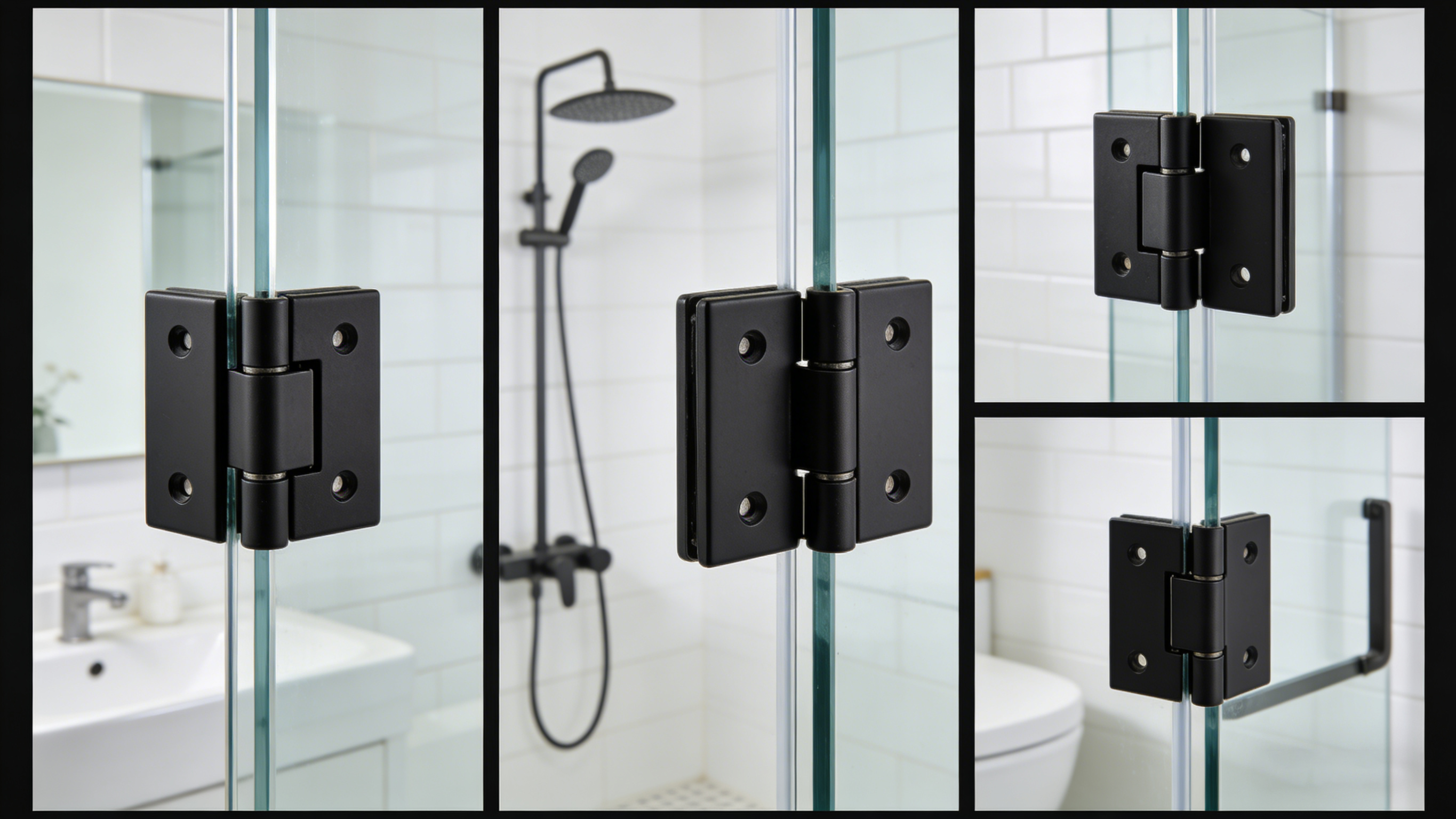
Most modern shower hinges have cover plates that hide the mounting screws for a sleek look. Look for a small set screw on the inside face of the hinge or simply try to snap the cover plate off if it is friction-fitted. Once the cover is removed, you will see the main mounting screws and potentially specific adjustment screws depending on the model.
2. How do I support the glass safely?
Do not skip this step. Before loosening anything, place your wood or rubber shims under the bottom of the glass door. When you loosen the hinge screws, the heavy glass will immediately drop due to gravity. Shims keep the door at the correct height and prevent it from shattering against the floor tile.
3. How do I reset the "Zero Point"?
For many positive close hinges, the adjustment is made by loosening the clamping screws that hold the glass.
With the door supported by shims, loosen the screws on the hinge plate attached to the glass (not the wall).
Push the door into the exact "closed" position you desire.
Ensure the gaps on the left and right are even.
Re-tighten the screws firmly.
Remove the shims and test the swing.
If your hinge has a dedicated 5-degree or 25-degree adjustment screw (often found on the internal cylinder), turn this screw clockwise or counter-clockwise to fine-tune the closing angle without loosening the glass grip.
How do I fix a hinge that makes noise or feels loose?
Sometimes the door closes fine, but the movement feels gritty, or the hinge clicks. This suggests the internal components are worn or dirty.
Lubrication and Cleaning
Using a silicone-based lubricant on the pivot point can help. Avoid petroleum-based products as they can degrade the rubber gaskets. If cleaning doesn't work, check the internal springs. If a spring has snapped inside the mechanism, no amount of adjustment will fix it; the unit needs replacement.
When should I replace my shower hinges?
Adjustments can only do so much. If you have tightened every screw and the door still sags, or if the metal finish is corroded and pitting, it is time to replace the hardware. High humidity environments are tough on metal.
When sourcing replacements, the quality of the alloy matters. Many generic hinges are made from zinc alloy which is prone to corrosion. High-quality shower hinges suppliers like Goldtech Hardware Co., Ltd. utilize superior manufacturing processes and materials that withstand the wet environment of a bathroom.
Established in 2011, Goldtech has spent over a decade refining architectural hardware. Their products undergo rigorous testing compliant with ISO standards. Whether you need a standard glass shower hinge or a custom solution via their ODM/OEM services, choosing a reputable manufacturer ensures you won't be repeating this repair in six months.
Troubleshooting Common Hinge Problems
If you are struggling to diagnose the specific issue, consult this table to find the likely culprit.
Symptom | Likely Cause | Solution |
Door drags on the floor | Gaskets have compressed; glass has slipped. | Support glass with shims, loosen glass-plate screws, raise door, retighten. |
Door pops open | "Zero point" is misaligned. | Adjust the internal cam or loosen glass grip to reset the closed position. |
Hinge makes a popping sound | Internal spring is broken or dry. | Lubricate pivot. If noise persists, replace the hinge. |
Gap is uneven | Wall mount screws are loose. | Tighten the screws attaching the hinge to the tiled wall. |
Why does the quality of the hinge matter?
It is easy to assume all hinges are the same, but the difference between a budget hinge and professional-grade architectural hardware is significant.
Cheap hinges often use poor-quality gaskets that dry out and lose their grip on the glass, leading to dangerous slippage. Furthermore, the internal return springs in low-quality units fatigue quickly, meaning you lose that crisp "positive close" action within a year.
Suppliers like Goldtech Hardware prioritize the integrity of the supply chain, from raw material to the finished product. By using precision engineering (including CNC machining) and high-density foam cushions in their packaging, they ensure the product that arrives at your door is ready for years of heavy use. For contractors and distributors, working with a partner that offers 2D/3D engineering services and design-for-manufacturability support is crucial for large-scale projects.
Conclusion
A drifting shower door is a nuisance, but it doesn't have to be permanent. By understanding the mechanics of your positive close shower hinge and following the safe adjustment procedures outlined above, you can restore the watertight seal and smooth operation of your bathroom door.
However, remember that hardware has a lifespan. If your hinges are corroded, making grinding noises, or failing to hold the glass despite your best efforts, replacement is the safest option. When that time comes, look for trusted manufacturers who adhere to international quality standards to ensure your new installation stands the test of time.
shower hinge
glass shower hinge
shower hinges suppliers


